
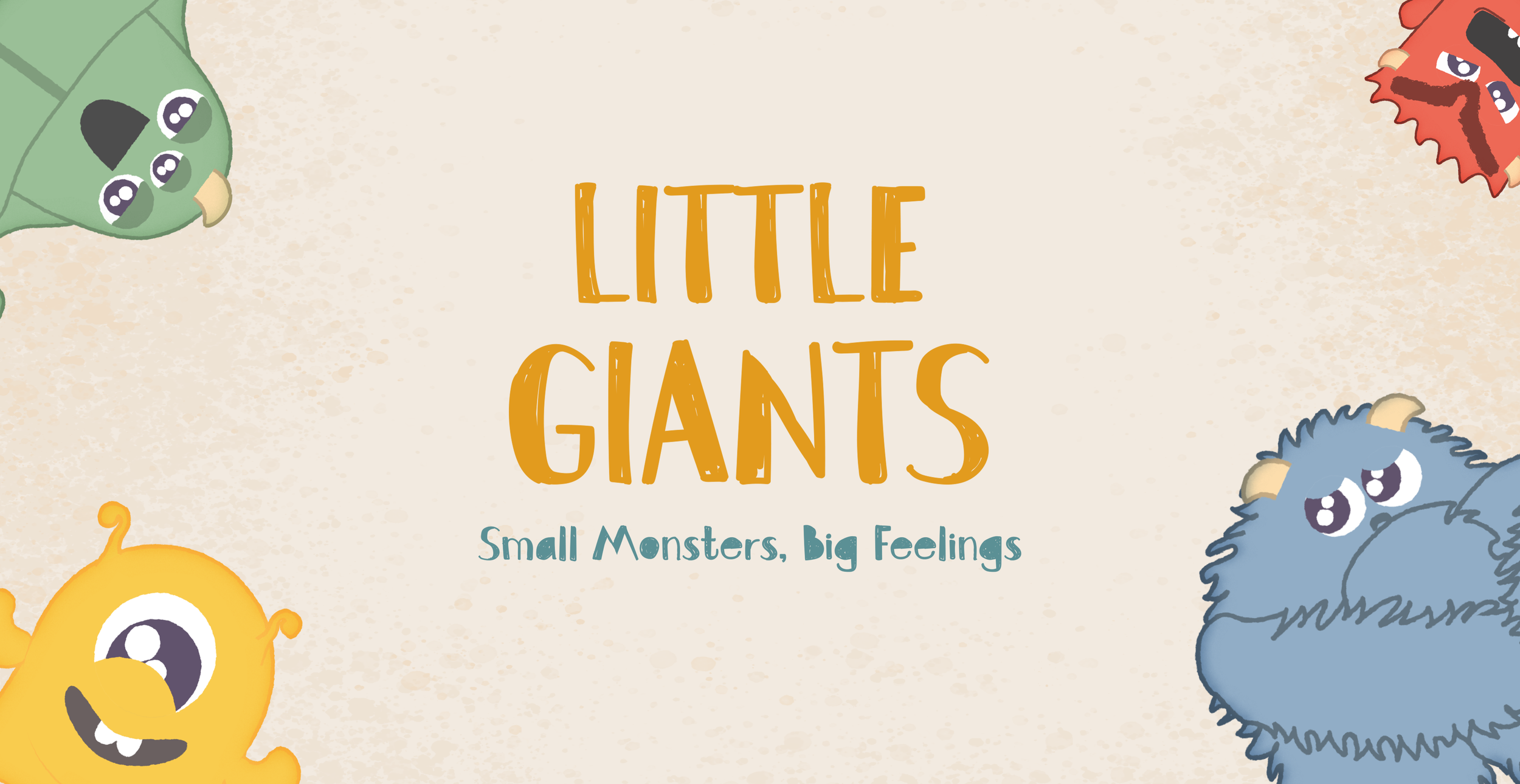
Little Giants.

Introduction
Little Giants is an animated short mixing 2D and 3D that teaches kids about emotional intelligence, developed as a graduation project grounded in thesis research on how children learn through audiovisual media. Drawing on Mayer's cognitive theory of multimedia learning and Paivio's dual coding theory, the project explores how character design, color, and shape build real emotional and cognitive connections with young viewers.
Year
2025
Industry
Education / Entertainment / Animated short film
/ Motion design / 2D / 3D Animation / Character design / Illustration
Services
Concept
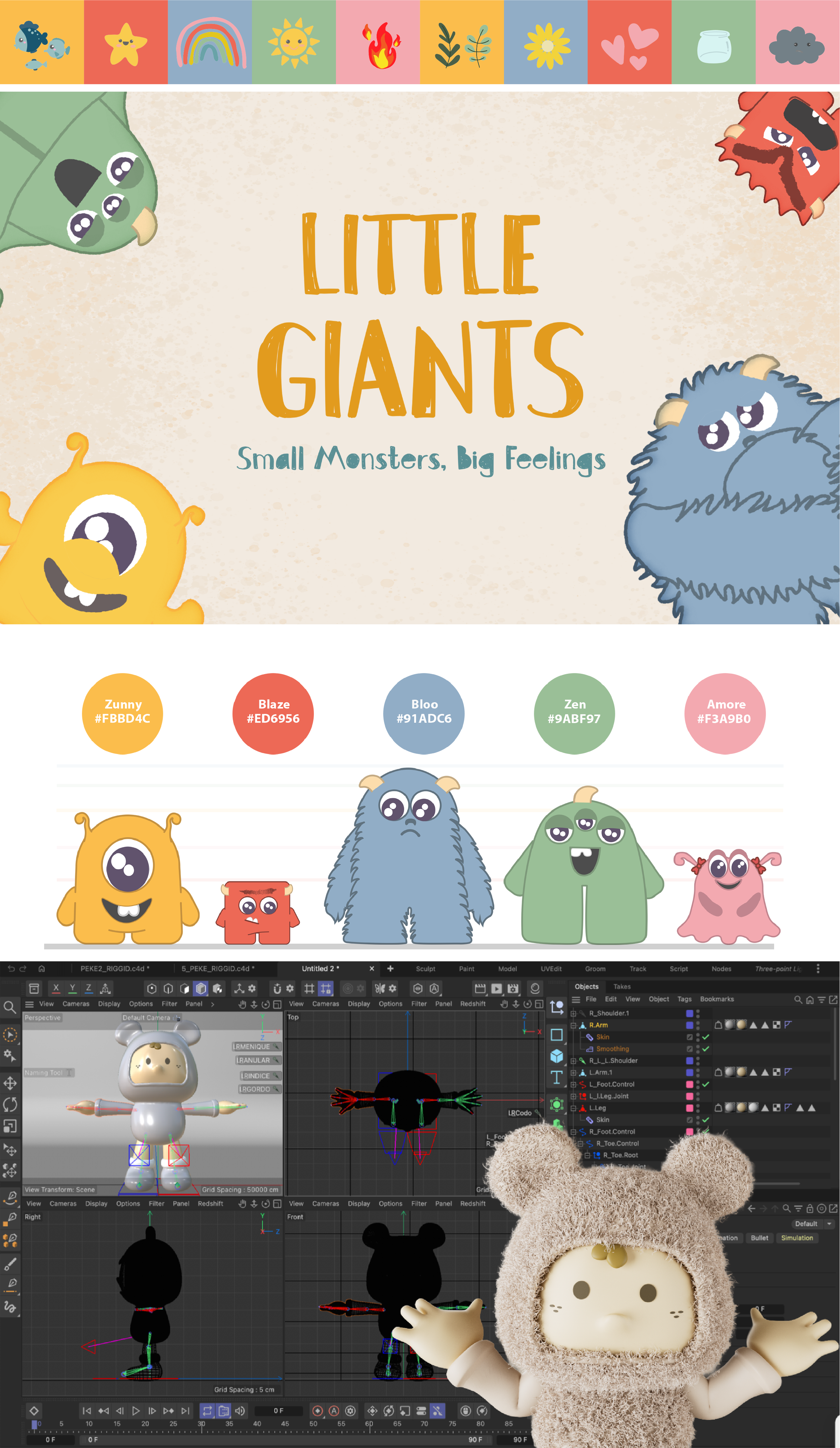
Little Giants tells its story through clean, uncomplicated visuals — designed to keep the focus on the characters' feelings rather than unnecessary decoration. Both 2D and 3D animated characters act as knowledge mediators, built in Adobe Illustrator, Cinema 4D, and After Effects, so children can concentrate on the emotions, actions, and concepts being presented — not the visuals around them.
BTS/ Behind the scenes
Children have always mattered to me — I've worked as an au pair and volunteered as a doctor clown, spending years around kids navigating big feelings for the first time. That closeness is what led me to make Little Giants: a video about emotional intelligence, built entirely with intention. Every color was chosen for its psychological effect, every character shape designed to feel approachable or expressive, every scene stripped of anything that wasn't essential. Nothing here is decoration — every visual choice carries a strategy and a purpose, rooted in research on how children actually learn.